Daily Production Losses During Changeovers

Why Does Cleaning the Line Keeps Creating New Failures?


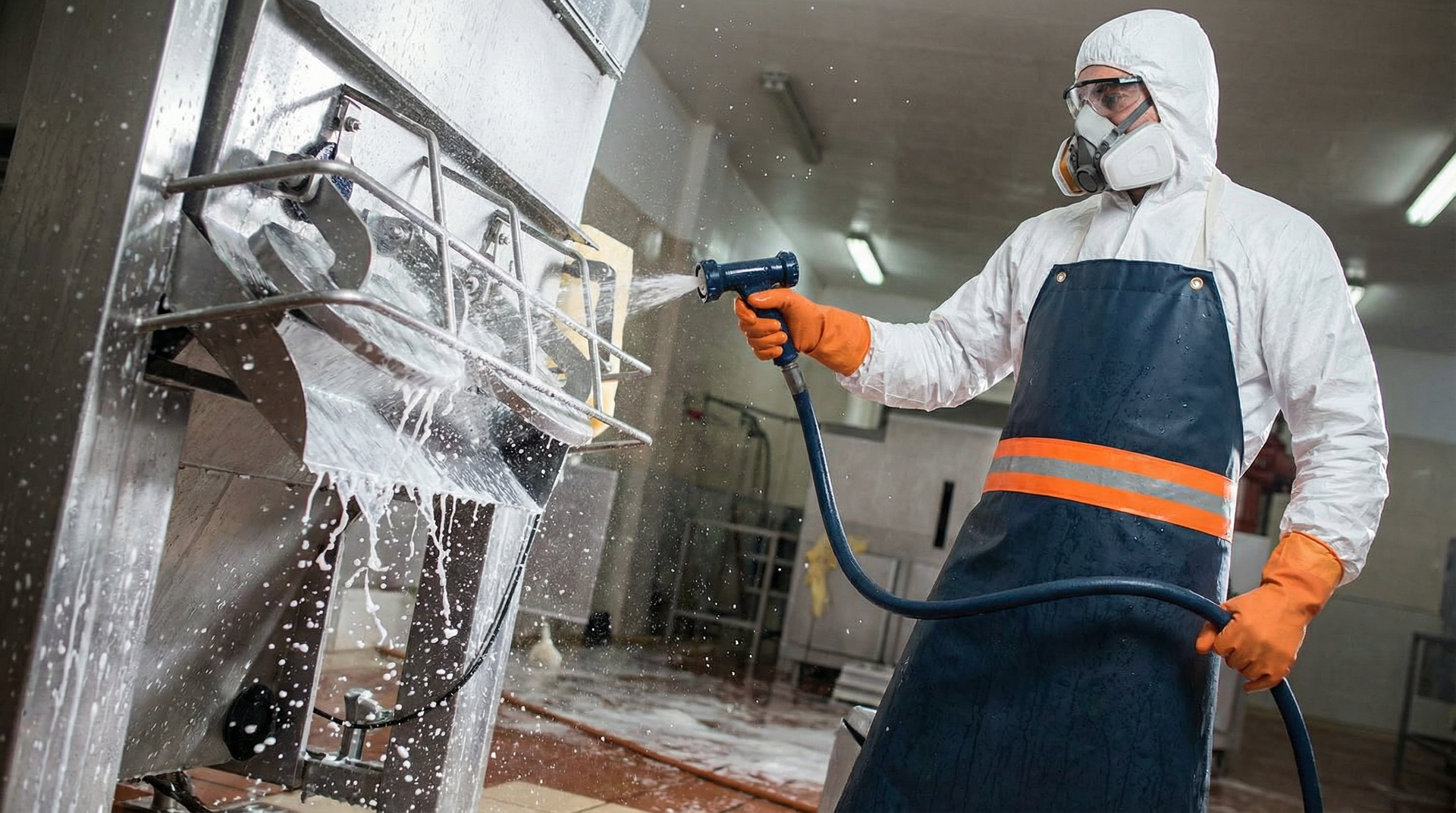
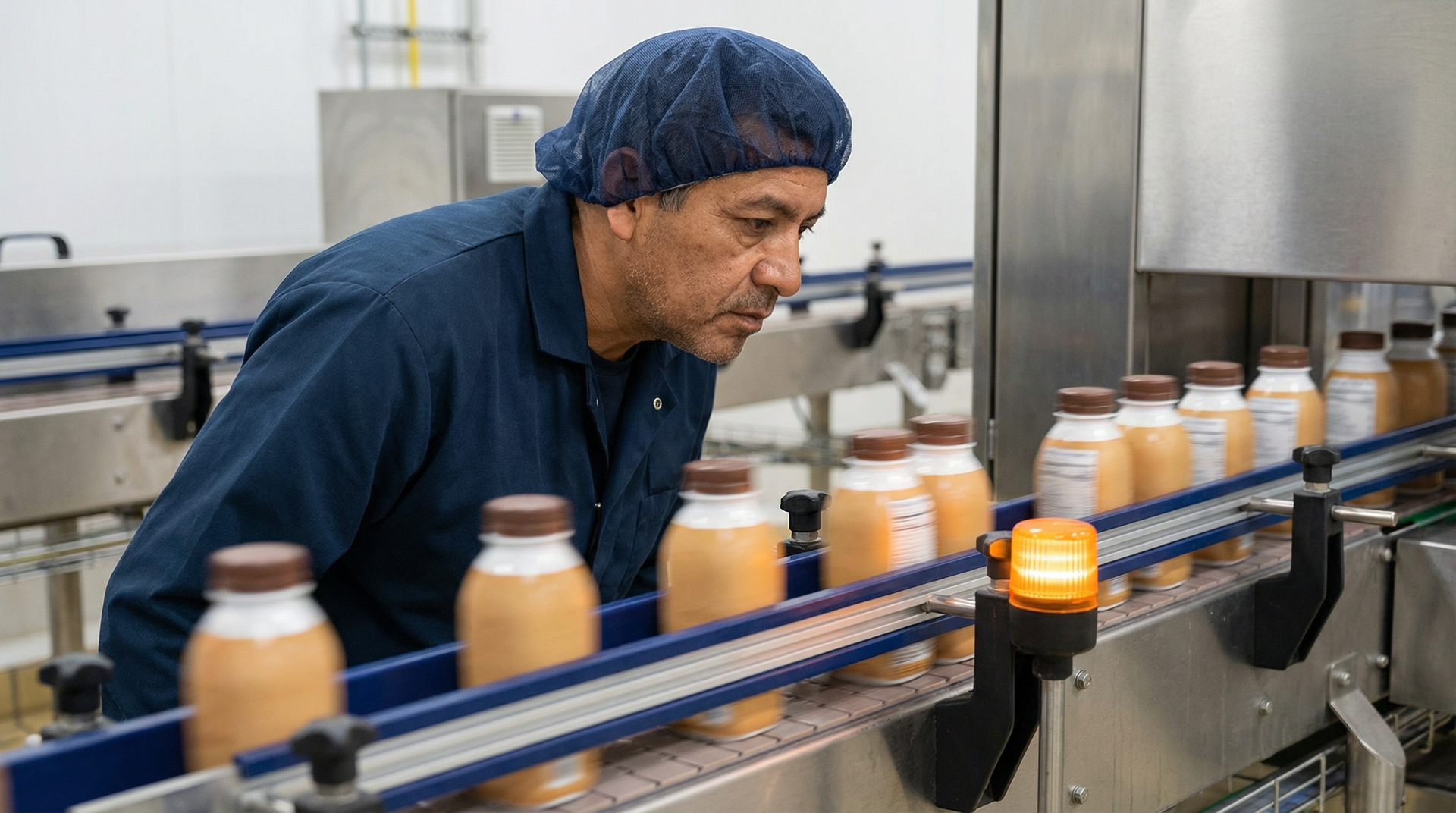
Every food processing plant depends on sanitation.

Without it, nothing else matters.

But many plants quietly accept something that shouldn’t be normal.


Equipment that runs fine before cleaning…

struggles after.

Fails hours later.

Or breaks down mid-shift with no obvious cause.


In this Corvex Quick Take, we look at what happens when sanitation and equipment reliability collide — and why some of the most disruptive failures on food processing lines actually begin during cleaning.


Sanitation-Induced Equipment Failures


Why Do Breakdowns Appear Hours or Days After Washdown?

The failure never happens during sanitation.

It shows up later.


A motor faults halfway through the run.

A sensor stops reading consistently.

A bearing heats up faster than normal.

A cabinet trips for no clear reason.

By then, sanitation is long gone from the conversation.


The failure gets treated as electrical.

Or mechanical.

Or just “bad luck.”


But when the same issues keep appearing after cleaning cycles, it’s rarely coincidence.

In many food plants, washdown doesn’t just remove contamination.


It quietly accelerates equipment deterioration.


Moisture migrates past seals.

Chemicals attack components not designed for the environment.

High-pressure spray forces water into places it doesn’t belong.

Parts are removed and reinstalled slightly differently each time.


None of this causes immediate failure.

That’s what makes it dangerous.


Total Productive Maintenance (TPM) challenges the assumption that sanitation damage is unavoidable. It treats post-cleaning failures as condition-based problems — not the cost of doing business.


Through Planned Maintenance, high-reliability plants define what equipment must withstand in real sanitation conditions. Components are selected, protected, and maintained based on exposure, not just runtime.


Early Equipment Management takes it further. Equipment is modified or specified to survive the actual cleaning process — not the one shown in the manual. But even well-designed equipment can fail if post-cleaning conditions aren’t controlled.


That’s where many plants struggle most.


Post-Sanitation Reassembly and Condition Loss


Why Does the Line Feel Less Stable After It’s Been Cleaned?

After sanitation, everything looks right.

Guards are back on.

Covers are closed.


The line starts.

But it doesn’t feel the same.


Operators notice it first.

A vibration that wasn’t there.

A sensor that needs extra attention.

A startup that takes longer than usual.

These are early warning signs — and they’re easy to miss.


Reassembly after cleaning is one of the most fragile moments in the life of food processing equipment. Slight misalignment. Improper torque. Seals not seated perfectly. Components stressed just enough to shorten their life.


Most plants don’t have a clear definition of what “normal condition” looks like after sanitation.

So small deviations stack up.


TPM addresses this through Autonomous Maintenance. Operators are trained not just to restart equipment, but to confirm critical conditions after cleaning — alignment, fasteners, seals, lubrication points, and basic functionality.

Still, these checks only matter if problems don’t disappear between shifts.


When the workforce is supported by technology that makes post-sanitation issues easy to capture and visible across teams, small condition losses don’t turn into delayed breakdowns.


And once sanitation-related damage is no longer invisible, another loss usually becomes obvious.


Equipment Designed to Run — Not to Be Cleaned


Why Does the Line Fight You After Every Washdown?

Many food processing lines were designed to produce product.

Not to survive daily chemical and water exposure.

The result is predictable.


Product traps that never fully dry.

Dead zones that collect moisture.

Components that require frequent tear-down just to keep running.

Operators compensate.


Maintenance adapts.

Sanitation works around the equipment.

Over time, instability becomes normal.

High-reliability food plants don’t accept this trade-off. Through Early Equipment Management, they treat cleanability and durability as performance requirements — not afterthoughts.


The goal isn’t just food safety compliance.

It’s equipment that returns to stable condition every time it’s cleaned.

Because when sanitation repeatedly damages equipment, production losses don’t show up as one big event.


They show up as slower starts.

More adjustments.

More “mystery” failures. And days that never quite hit plan.


If you want to understand how sanitation, reassembly, and equipment design quietly erode capacity on food processing lines, request:


The 7 Hidden Line Losses in Food Processing — and How High-Reliability Plants Eliminate Them


It outlines the losses that occur between cleaning cycles, why they repeat, and how top food plants remove them without compromising safety.

The question isn’t whether sanitation is affecting your equipment.


It’s whether the damage is being controlled — or quietly accepted.


And that’s your Corvex Connected Workforce Quick Take!


Contact Corvex

Connect Your Workforce Today

Contact Us
March 11, 2026
Why do Food Processing Lines Need Constant Human Help to Keep Running? Walk most food processing lines and you’ll notice something immediately. Someone is always watching. Clearing. Spacing. Adjusting. Helping product move where it’s supposed to go. It doesn’t feel like a problem. It feels like how the line runs. In this Corvex Quick Take , we look at how unstable flow quietly drains capacity on food processing lines — and why human effort often becomes the hidden control system when equipment and line design fall short. Inconsistent Product Flow on Food Processing Lines Why Does the Line Run — But Only with Constant Attention? On paper, the line is automated. In reality, it’s being managed moment by moment. Product surges at the infeed. Then starves downstream. Items bridge, smear, clump, or tip. Accumulation backs up in one area while another runs dry. Operators step in to keep things moving. None of this triggers a downtime event. The line never fully stops. But flow instability steals capacity every minute it continues. Food processing lines are designed for steady, predictable input. When upstream variability isn’t absorbed by the system, it gets pushed onto people instead. Total Productive Maintenance (TPM) treats flow problems as equipment and system losses — not operator shortcomings. Through Focused Improvement, high-performing plants identify where variability enters the line and why it overwhelms downstream equipment. But flow issues don’t exist in isolation. They expose another weakness almost immediately. Accumulation That Creates Pressure — Not Protection Why Do Conveyors and Buffers Make Problems Worse Instead of Better? Accumulation is supposed to protect flow. In many food plants, it does the opposite. Product tips under pressure. Packages scuff or deform. Sensors fault when zones fill too quickly. Clearing one jam creates another. What was meant to absorb variability becomes a source of it. The issue isn’t accumulation itself. It’s accumulation that isn’t matched to real product behavior. Food products aren’t rigid. They change with temperature, moisture, speed, and contact. When accumulation systems don’t account for this, pressure builds — and instability spreads across the line. TPM addresses this through Early Equipment Management. High-reliability plants evaluate how product actually behaves under accumulation, not how it’s expected to behave in design specs. But even well-designed systems can drift out of balance over time. That’s when people step in. When Operators Become the Control System Why Does the Line Depend So Much on Manual Intervention? Every plant has these roles. The person who spaces product by hand. The operator who clears the same jam every run. The helper stationed permanently at one trouble spot. They’re not there because the work requires it. They’re there because the line does. Manual intervention becomes normal when equipment can’t maintain stable conditions on its own. Sensors lose credibility. Alarms get bypassed. Speed is capped to keep things manageable. None of this shows up as downtime. But it all shows up as lost output. TPM uses Autonomous Maintenance to draw a clear line between normal operation and compensation behavior. When operators are trained to recognize abnormal flow — and empowered to flag it — manual work stops being invisible. Still, visibility alone doesn’t fix the system. Lines That Don’t Run as One System Why Do Small Imbalances Cascade into Bigger Problems? Many food processing lines are built from capable individual machines. But they don’t behave like a system. One machine runs slightly faster. Another recovers more slowly after a stop. A third is sensitive to pressure or spacing. The result is constant starving and blocking — even though no single machine appears “down.” TPM exposes these losses by looking at line performance end-to-end. Through Focused Improvement and Early Equipment Management, top plants stop tuning machines in isolation and start stabilizing the interfaces between them. Because when flow losses aren’t addressed at the system level, they don’t show up as one big failure.They show up as: Extra labor added “temporarily” Lines that require babysitting Output that never quite matches capability If you want to understand how flow instability and human compensation quietly drain capacity on food processing lines, request: The 7 Hidden Line Losses in Food Processing — and How High-Reliability Plants Eliminate Them It outlines where flow breaks down, why people end up compensating for equipment and design gaps, and how top food plants restore stability without adding labor. The question isn’t whether your line needs constant attention. It’s whether that attention is hiding problems you could eliminate.  And that’s your Corvex Connected Workforce Quick Take!
March 11, 2026
Why Does Cleaning the Line Keeps Creating New Failures? Every food processing plant depends on sanitation. Without it, nothing else matters. But many plants quietly accept something that shouldn’t be normal. Equipment that runs fine before cleaning… struggles after. Fails hours later. Or breaks down mid-shift with no obvious cause. In this Corvex Quick Take, we look at what happens when sanitation and equipment reliability collide — and why some of the most disruptive failures on food processing lines actually begin during cleaning. Sanitation-Induced Equipment Failures Why Do Breakdowns Appear Hours or Days After Washdown? The failure never happens during sanitation. It shows up later. A motor faults halfway through the run. A sensor stops reading consistently. A bearing heats up faster than normal. A cabinet trips for no clear reason. By then, sanitation is long gone from the conversation. The failure gets treated as electrical. Or mechanical. Or just “bad luck.” But when the same issues keep appearing after cleaning cycles, it’s rarely coincidence. In many food plants, washdown doesn’t just remove contamination. It quietly accelerates equipment deterioration. Moisture migrates past seals. Chemicals attack components not designed for the environment. High-pressure spray forces water into places it doesn’t belong. Parts are removed and reinstalled slightly differently each time. None of this causes immediate failure. That’s what makes it dangerous. Total Productive Maintenance (TPM) challenges the assumption that sanitation damage is unavoidable. It treats post-cleaning failures as condition-based problems — not the cost of doing business. Through Planned Maintenance, high-reliability plants define what equipment must withstand in real sanitation conditions. Components are selected, protected, and maintained based on exposure, not just runtime. Early Equipment Management takes it further. Equipment is modified or specified to survive the actual cleaning process — not the one shown in the manual. But even well-designed equipment can fail if post-cleaning conditions aren’t controlled. That’s where many plants struggle most. Post-Sanitation Reassembly and Condition Loss Why Does the Line Feel Less Stable After It’s Been Cleaned? After sanitation, everything looks right. Guards are back on. Covers are closed. The line starts. But it doesn’t feel the same. Operators notice it first. A vibration that wasn’t there. A sensor that needs extra attention. A startup that takes longer than usual. These are early warning signs — and they’re easy to miss. Reassembly after cleaning is one of the most fragile moments in the life of food processing equipment. Slight misalignment. Improper torque. Seals not seated perfectly. Components stressed just enough to shorten their life. Most plants don’t have a clear definition of what “normal condition” looks like after sanitation. So small deviations stack up. TPM addresses this through Autonomous Maintenance. Operators are trained not just to restart equipment, but to confirm critical conditions after cleaning — alignment, fasteners, seals, lubrication points, and basic functionality. Still, these checks only matter if problems don’t disappear between shifts. When the workforce is supported by technology that makes post-sanitation issues easy to capture and visible across teams, small condition losses don’t turn into delayed breakdowns. And once sanitation-related damage is no longer invisible, another loss usually becomes obvious. Equipment Designed to Run — Not to Be Cleaned Why Does the Line Fight You After Every Washdown? Many food processing lines were designed to produce product. Not to survive daily chemical and water exposure. The result is predictable. Product traps that never fully dry. Dead zones that collect moisture. Components that require frequent tear-down just to keep running. Operators compensate. Maintenance adapts. Sanitation works around the equipment. Over time, instability becomes normal. High-reliability food plants don’t accept this trade-off. Through Early Equipment Management, they treat cleanability and durability as performance requirements — not afterthoughts. The goal isn’t just food safety compliance. It’s equipment that returns to stable condition every time it’s cleaned. Because when sanitation repeatedly damages equipment, production losses don’t show up as one big event. They show up as slower starts. More adjustments. More “mystery” failures. And days that never quite hit plan. If you want to understand how sanitation, reassembly, and equipment design quietly erode capacity on food processing lines, request: The 7 Hidden Line Losses in Food Processing — and How High-Reliability Plants Eliminate Them It outlines the losses that occur between cleaning cycles, why they repeat, and how top food plants remove them without compromising safety. The question isn’t whether sanitation is affecting your equipment. It’s whether the damage is being controlled — or quietly accepted. And that’s your Corvex Connected Workforce Quick Take!
March 11, 2026
Why Does Output Get Disrupted on the Manufacturing Line — Even When Equipment Is Running? Every food processing plant feels the same pressure. More volume. Tighter margins. Shorter shelf life. Zero tolerance for mistakes. And yet, most days don’t fall apart because of one major failure. They erode slowly. Quietly. One interruption at a time. In this Corvex Quick Take, we look at the production losses food processors feel every shift — the ones that make it seem like you’re always behind, even when the line is technically “running.” Unplanned Equipment Failures in Food Processing Why Do the Same “Surprise” Breakdowns Keep Stopping the Line? The worst downtime in a food plant isn’t the failure everyone saw coming. It’s the stop that feels random. The filler that ran all week. The sealer that was “fine” last shift. The conveyor that made it through sanitation. Then suddenly — alarms. Product backed up. QA holding material. Maintenance rushing in while production asks, “How long?” And what makes it worse? You’ve seen this failure before. Same machine. Same component. Same environment. It got fixed — just not fixed fixed. Most food plants don’t struggle because equipment breaks. They struggle because the same breakdowns keep returning, disguised as surprises. This is where many processors start to realize the issue isn’t the repair. It’s how failures are being understood in the first place. Total Productive Maintenance (TPM) starts by rejecting the idea that breakdowns in food plants are random or “just part of washdown.” Repeat failures are treated as signals — evidence that specific conditions are degrading and no one is controlling them tightly enough. Through Planned Maintenance, teams stop replacing parts blindly and start defining what actually causes failure in food environments: moisture intrusion, chemical exposure, misalignment, seal damage, wear accelerated by cleaning, and improper reassembly. Focused Improvement then targets the failures that return again and again. The goal isn’t faster response — it’s permanent removal of the cause. But even the best maintenance strategy breaks down if early warning signs never get captured. In many food plants, those signals live in someone’s head. A vibration after sanitation. A sensor that’s slower than it used to be. A seal that “needs watching.” With the right workforce technology in place, those signals don’t disappear between shifts. Conditions that lead to repeat failures get captured, shared, and addressed before they turn into another unplanned stop. Once unplanned downtime is no longer treated as random, another hidden loss usually becomes impossible to ignore. Chronic Micro-Stops on Food Processing Lines How Do Small Interruptions Quietly Drain Capacity Every Shift? If you walked your line with a stopwatch, you’d see it. The photo eye that needs wiping. The product that bridges at the infeed. The seal that fails once, then again. The reset button that gets pressed five… ten… twenty times a shift. None of it feels serious enough to log. None of it feels worth a maintenance call. So it disappears — into the gray space between “running” and “down.” But here’s the uncomfortable truth: Those small interruptions steal more production than major breakdowns ever will. This is where many food processors realize their biggest losses aren’t dramatic. They’re habitual. TPM treats minor stops as real losses, not background noise. Through Autonomous Maintenance, operators are trained to clean , inspect, and recognize abnormal conditions as part of daily work — before those issues turn into downtime, scrap, or quality holds. Still, small problems only get solved when they’re consistently visible. When the workforce is supported by technology that makes minor stops easy to capture and impossible to ignore, micro-stops stop slipping through the cracks. What used to feel like “just how the line runs” becomes something that can finally be addressed. And once those small losses are exposed, another pattern usually becomes clear. Most food plants don’t realize how much output is being lost while equipment is technically running. They feel it — in constant interruptions, unstable flow, and days that never quite hit plan — but the causes stay fragmented and hard to pin down. If you want to see where production is quietly being disrupted across each shift, request: The 7 Hidden Line Losses in Food Processing — and How High-Reliability Plants Eliminate Them It outlines the losses that hide between downtime events, why they repeat, and how top food plants make them visible before they compound. The question isn’t whether these disruptions are happening in your plant. It’s whether you’re ready to stop treating them as unavoidable. And that’s your Corvex Connected Workforce Quick Take!
February 11, 2026
What It Takes to Finally Break the Cycle? Every metal fabrication plant benefits from key operators who notice problems early. In this Corvex Connected Quick Take we look at what happens when problem signals fade — and why that’s when risk, incidents, and repeat failures accelerate. Missed Early Warning Signs on the Shop Floor How does Operator Knowledge Gets Lost? Operators hear it first. Feel it first. Smell it first. The machine still runs — but it doesn’t feel right. At first, those warnings get mentioned. A comment at shift change. A note in passing. A quiet heads-up. But when nothing breaks right away, the noise becomes familiar. The vibration becomes “normal.” The smell becomes part of the process. And eventually, operators stop pointing out issues at all. When this happens, metal manufacturers lose their earliest detection system. That’s when the plant loses its earliest warning system — without even realizing it. Safety and Environmental Risk in Metal Fabrication How does Equipment Degradation Turn Into Incidents? Very few safety incidents come out of nowhere. They build slowly. A small oil leak becomes a slick. A nuisance guard gets bypassed. Safety failures often begin as maintenance and condition failures. Total Productive Maintenance (TPM) treats safety risks as equipment condition problems. Through Autonomous and Planned Maintenance, hazards like leaks, overheating, degraded guarding, and dust buildup are addressed at the source. Sustained safety depends on daily verification, not periodic audits. With the right workforce technology, reinforcing condition checks and accountability, risks are addressed before they escalate. When Fabrication Data Doesn’t Match Reality Why do Reports Miss What’s Really Happening on the Floor? The reports say one thing. The floor feels like another . Downtime gets lumped together. Minor stops disappear. At this stage, metal manufacturers are often flying blind without realizing it. TPM relies on clear loss definitions and visibility. OEE thinking separates downtime, speed loss, and quality loss so teams know where capacity is really going. But visibility only works if the data reflects reality. Workforce technology bridges the gap between reports and reality by capturing what actually happens on the floor. Losses become visible, patterns emerge, and decisions are finally grounded in facts instead of frustration. Repeat Failures in Metal Fabrication Plants Why do the Problems You “Fixed” Keep Coming Back? At some point, every plant manager asks: “Didn’t we already fix this?” This is the moment where most improvement efforts quietly stall. TPM is built around sustainability. Improvements aren’t considered complete until they’re standardized, verified, and reinforced through daily work. Focused Improvement removes causes permanently. Standardization locks gains in place. Continuous verification prevents backsliding. When improvement becomes part of daily execution, problems stop returning. The right workforce technology makes improvement stick by embedding it into how work actually gets done. Repeat failures. Fading warnings. Rising risk. Data you don’t fully trust. These aren’t isolated issues — they’re what happens when improvement isn’t reinforced every day. At some point, effort stops being the problem. Visibility does. So the real question is simple: are you managing metal fabrication problems — or finally ready to make them stop coming back? Most metal fabrication plants don’t keep repeating problems because they lack effort or expertise. They repeat them because signals fade, learning disappears, and improvement never fully sticks. If you want to understand why the same issues keep coming back — and what high-performing plants do differently to stop that cycle — request: The 7 Hidden Capacity Drains in Metal Fabrication — and How Top Plants Reduce Them It shows how missed signals, incomplete fixes, and invisible losses quietly reset improvement efforts — and how top plants reinforce learning so problems don’t return in new forms. The question isn’t whether your plant works hard to improve. It’s whether your improvement actually survives the next shift. And that’s your Corvex Connected Workforce Quick Take! 
February 9, 2026
Why do Quality, Startups, and Maintenance Rarely Feel Settled? When speed drops to stay safe, something else usually follows. Not all at once. Not loudly. Stability doesn’t disappear in a single event. It erodes through small adjustments, workarounds, and compensations that slowly become normal. In this Corvex Connected Quick Take we look at the instability that creeps into metal fabrication operations — the kind that doesn’t trigger alarms but steadily increases stress, scrap, and rework, and fatigue across the plant. Quality Drift in Metal Fabrication Processes Why does Scrap Appear Without Obvious Cause? The part was good an hour ago. Now it isn’t. Nothing obvious changed. No program edits. No setup changes. And yet — adjustments start creeping in. Quality issues like this feel random, but they’re not. They’re slow. They show up after speed has already been reduced. After operators have learned how to “work around” the machine. After stability became something you manage instead of something you have. This is where many plants mistake adjustments for control. If quality only holds when operators are constantly adjusting, the process was never actually stable to begin with. It was being propped up. True stability means the process holds without constant intervention. Without someone “watching it closely.” To stop drift, metal manufacturers have to look upstream — at what’s changing before defects appear, not just the defects themselves. Once drift becomes normal, another weakness usually shows itself quickly. Unstable Startups and Changeovers in Metal Plants Why are the First Parts Rarely Trusted? You know the feeling when a line comes back up — but no one relaxes yet. The first parts aren’t trusted. Adjustments pile up. Everyone waits to see what breaks or drifts before declaring it “stable.” Startups expose whether process stability actually exists — or was just assumed. Total Productive Maintenance (TPM) removes guesswork from startups by defining what “ready” actually means. Standard startup and changeover procedures ensure machines are clean, lubricated, aligned, and verified before running at speed. Training reduces dependence on tribal knowledge. Planned Maintenance ensures equipment doesn’t start the shift… already compromised. Repeatable startups depend on repeatable verification, not memory or experience. Workforce technology ensures startups aren’t dependent on memory or heroics. Known-good conditions are verified, not assumed — making every startup predictable, repeatable, and far less stressful. And when startups are unstable, the pressure almost always lands in the same place. Maintenance Firefighting in Metal Fabrication Why are Maintenance Teams so Busy - Without Eliminating Failures? Maintenance never stops moving . PMs. Breakdowns. Emergency calls. Parts runs. Late nights. And yet — the same failures keep coming back. At this point, many metal manufacturers confuse effort with effectiveness. TPM shifts maintenance from activity to effectiveness. Planned Maintenance focuses on preventing failure, not just responding to it. Work is standardized so the same job is done the same way every time. Focused Improvement attacks the causes of repeat work, eliminating entire categories of failure instead of chasing symptoms. Over time, emergency work decreases — not because people work harder, but because fewer things break. Still, small problems only get solved if they’re consistently visible across shifts and teams. But discipline alone doesn’t hold if learning never sticks. And sustaining a shift requires more than good intentions. When maintenance teams are supported by technology that captures failure patterns and reinforces standard work, effort finally translates into lasting improvement. And the same problems stop returning in new forms. Quality drift. Stressful startups. A maintenance team stuck in permanent firefighting mode. That’s not bad luck — that’s instability doing exactly what instability does. When everything technically “works” but nothing ever feels settled, the system is telling you something. How much longer does your plant keep compensating — adjusting, slowing down, reacting — instead of stabilizing the conditions that create these problems in the first place? Most plants never see all the ways capacity is leaking each shift. They feel it — in missed targets, constant adjustment, and teams stretched thin — but they rarely see it clearly. If you want to understand where production capacity is quietly being lost inside your operation, request: The 7 Hidden Capacity Drains in Metal Fabrication — and How Top Plants Reduce Them It breaks down the losses that don’t show up as downtime, why they persist, and what high-performing plants do differently to control them. The question isn’t whether these drains exist in your plant. It’s whether you’re ready to finally make them visible. And that’s your Corvex Connected Workforce Quick Take!
February 6, 2026
Why do Machines Rarely Run at Their Designed Throughput? On paper, your equipment can run faster. In reality, no one lets it. Speed gets dialed back to protect quality. To avoid jams. To keep things stable. In this Corvex Connected Quick Take we look at how Operators learn exactly how far they can push before something goes wrong. Over time, that reduced speed becomes the new normal. Not because it’s optimal. Because it’s safe. At this stage, many plants start asking whether speed loss is really a choice — or a symptom. TPM reframes speed loss as a symptom, not a decision Most speed limits exist because machines can’t be trusted — not because they’re incapable. But predictability doesn’t come from individual judgment. It comes from shared visibility. When teams know the machine is healthy — and can prove it — speed stops feeling risky and starts feeling repeatable. Operators don’t have to guess. Supervisors don’t have to negotiate. Maintenance doesn’t have to stand by “just in case.” Confidence replaces caution. Unplanned downtime. Constant resets. Slower-than-designed equipment. These aren’t separate problems — they’re the daily reality of metal fabrication plants that are reacting instead of seeing issues early. Most plants don’t accept these losses consciously. They inherit them. Normalize them. Then explain them away as “part of the job.” The real question isn’t whether these losses exist in your plant . It’s how long you’re willing to keep explaining them as “just part of the job.” If you could actually see where capacity is being lost — every shift, every machine — would you still accept today’s output as the best you can do? Most plants never see all the ways capacity is leaking each day. They feel it — in missed targets, constant adjustment, and stretched teams — but they rarely see it clearly. If you want to understand where production capacity is quietly being lost inside your operation, request: The 7 Hidden Capacity Drains in Metal Fabrication — and How Top Plants Reduce Them It breaks down the losses that don’t show up as downtime, why they persist, and what high-performing plants do differently to control them. The question isn’t whether these drains exist in your plant. It’s whether you’re ready to finally make them visible. And that’s your Corvex Connected Workforce Quick Take!
February 6, 2026
Why does Output Get Disrupted on the Shop Floor — Even When Equipment Is Running? Every metal fabrication plant feels pressure to produce more — faster, cleaner, with less disruption. And yet, most days don’t fall apart because of one big failure. They erode slowly. Quietly. One interruption at a time. In this Corvex Connected Quick Take we look at the losses metal manufacturers feel every shift — the ones that make it seem like you’re always behind, even when nothing is technically “broken.” Unplanned Equipment Failures in Metal Fabrication Why do the Same “Surprise” Breakdowns Keep Shutting Down Production? The worst downtime isn’t the catastrophic failure everyone saw coming. It’s the stop that comes out of nowhere. The machine that ran fine yesterday. The line that was “good enough” last shift. Suddenly alarms. Phone calls. Maintenance scrambling. Production asking, “How long?” And what makes it worse? This isn’t new. You’ve seen this failure before. Same machine. Same component. Same story. It got fixed… just not fixed fixed. Most plants don’t struggle because equipment breaks. They struggle because the same breakdowns keep showing up , dressed as surprises. This is where most metal manufacturers start to realize the issue isn’t the repair — it’s how breakdowns are being understood in the first place. Total Productive Maintenance (TPM) is a holistic strategy to maximize equipment effectiveness. It starts by rejecting the idea that breakdowns are random. It treats repeat failures as signals — evidence that specific conditions are deteriorating and no one is controlling them tightly enough. Through Planned Maintenance, teams identify failure modes instead of just replacing broken parts. Lubrication, alignment, wear points, contamination, and adjustment standards are defined and maintained intentionally, not reactively. Focused Improvement then targets the failures that come back again and again. The goal isn’t faster repair — it’s permanent removal of the cause. But discipline alone doesn’t stop repeat failures if early warning signs never get captured or shared. With the right workforce technology in place, early warning signs don’t stay hidden in someone’s head or notebook. Conditions that lead to repeat failures are captured, shared, and addressed before they turn into another “surprise” shutdown. Once unplanned downtime is no longer treated as random, another hidden loss usually becomes impossible to ignore. Chronic Micro-Stops on Metal Fabrication Lines How do Small Interruptions Quietly Drain Capacity Every Shift? If you walked your floor with a stopwatch, you’d see it. The sensor that needs a wipe. The jam that clears with a tap. The reset button that gets pressed five, ten, twenty times a shift. None of it feels serious enough to log. None of it feels worth a maintenance ticket. So it disappears — into the cracks between “running” and “down.” But here’s the uncomfortable part: Those little stops steal more production than the big failures ever will. This is the point where many metal manufacturers realize their biggest losses aren’t dramatic — they’re habitual. TPM methodology treats minor stops as first-class losses, not background noise. Through Autonomous Maintenance, operators are trained to clean, inspect , and identify abnormalities as part of daily work — before those issues turn into real downtime. Still, small problems only get solved if they’re consistently visible across shifts and teams. When the workforce is supported by technology that makes small problems easy to capture and impossible to ignore, micro-stops stop slipping through the cracks. What used to be invisible becomes actionable. And once minor stops are exposed, another pattern usually surfaces immediately. Most plants don’t realize how much production is being lost while equipment is technically “running.” They feel it — in constant interruptions, stalled momentum, and days that never quite hit plan — but the causes stay fragmented and hard to pin down. If you want to see where output is quietly being disrupted across each shift, request: The 7 Hidden Capacity Drains in Metal Fabrication — and How Top Plants Reduce Them It outlines the losses that hide between downtime events, why they repeat, and how high-performing plants make them visible before they compound. The question isn’t whether these disruptions are happening in your plant. It’s whether you’re ready to stop treating them as unavoidable. And that’s your Corvex Connected Workforce Quick Take! 
July 29, 2025
Learn how Planned Maintenance reduces unplanned downtime, controls rising maintenance costs and supports a more stable TPM program for metal manufacturers.
July 24, 2025
See how Planned Maintenance helps metal manufacturers prevent production bottlenecks, protect capacity and support more predictable, reliable operations.
July 24, 2025
Explore how Total Productive Maintenance (TPM) boosts reliability, throughput and safety in metal manufacturing while engaging operators in continuous improvement.