Daily Production Losses from Line Flow Breakdown
Why do Food Processing Lines Need Constant Human Help to Keep Running?
Walk most food processing lines and you’ll notice something immediately.
Someone is always watching.
Clearing.
Spacing.
Adjusting.
Helping product move where it’s supposed to go.
It doesn’t feel like a problem.
It feels like how the line runs.
In this Corvex Quick Take, we look at how unstable flow quietly drains capacity on food processing lines — and why human effort often becomes the hidden control system when equipment and line design fall short.
Inconsistent Product Flow on Food Processing Lines
Why Does the Line Run — But Only with Constant Attention?
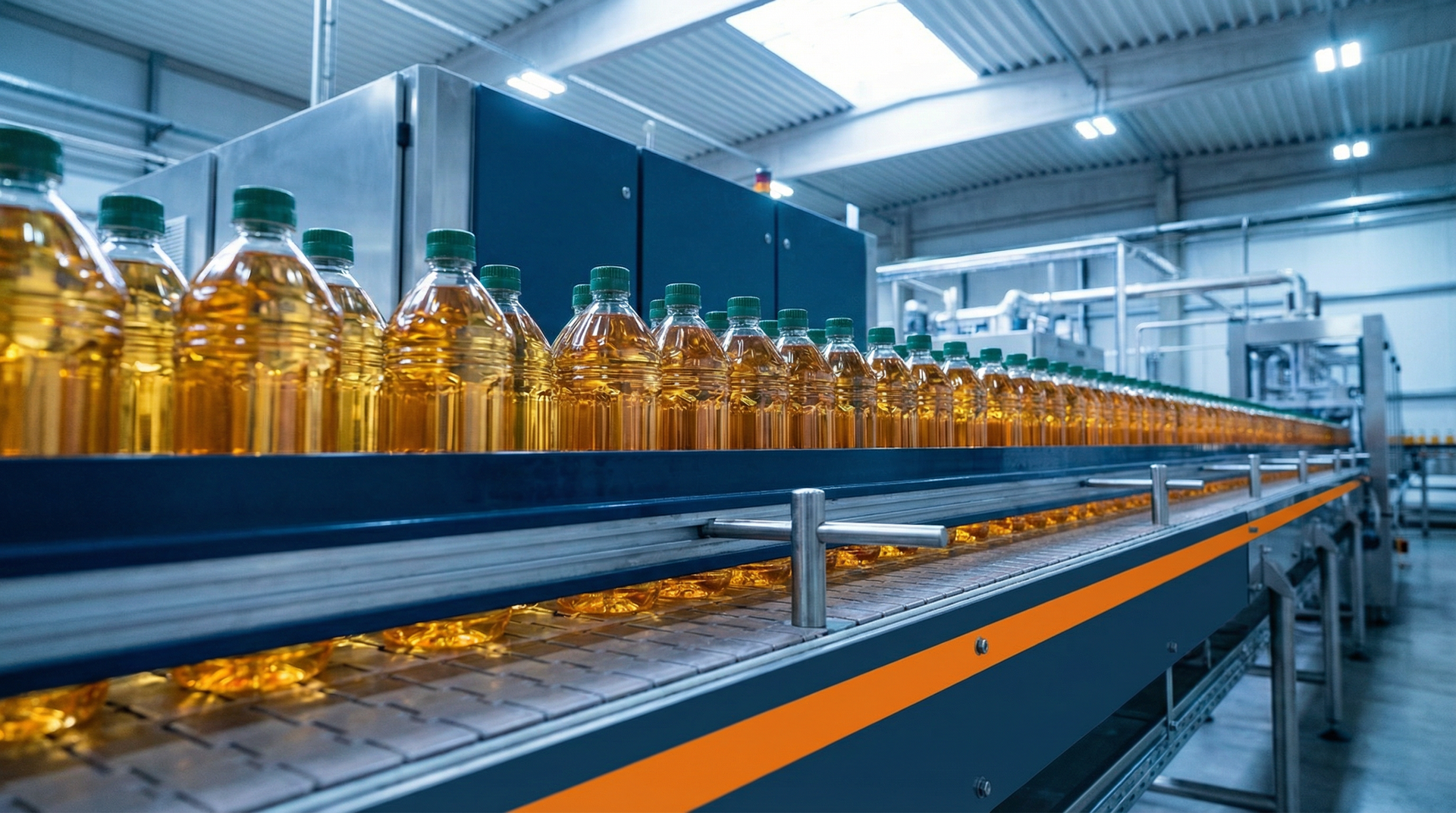
On paper, the line is automated.
In reality, it’s being managed moment by moment.
Product surges at the infeed.
Then starves downstream.
Items bridge, smear, clump, or tip.
Accumulation backs up in one area while another runs dry.
Operators step in to keep things moving.
None of this triggers a downtime event.
The line never fully stops.
But flow instability steals capacity every minute it continues.
Food processing lines are designed for steady, predictable input. When upstream variability isn’t absorbed by the system, it gets pushed onto people instead.
Total Productive Maintenance (TPM) treats flow problems as equipment and system losses — not operator shortcomings. Through Focused Improvement, high-performing plants identify where variability enters the line and why it overwhelms downstream equipment.
But flow issues don’t exist in isolation.
They expose another weakness almost immediately.
Accumulation That Creates Pressure — Not Protection
Why Do Conveyors and Buffers Make Problems Worse Instead of Better?
Accumulation is supposed to protect flow.
In many food plants, it does the opposite.
Product tips under pressure.
Packages scuff or deform.
Sensors fault when zones fill too quickly.
Clearing one jam creates another.
What was meant to absorb variability becomes a source of it.
The issue isn’t accumulation itself.
It’s accumulation that isn’t matched to real product behavior.
Food products aren’t rigid. They change with temperature, moisture, speed, and contact. When accumulation systems don’t account for this, pressure builds — and instability spreads across the line.
TPM addresses this through Early Equipment Management. High-reliability plants evaluate how product actually behaves under accumulation, not how it’s expected to behave in design specs.
But even well-designed systems can drift out of balance over time.
That’s when people step in.
When Operators Become the Control System
Why Does the Line Depend So Much on Manual Intervention?
Every plant has these roles.
The person who spaces product by hand.
The operator who clears the same jam every run.
The helper stationed permanently at one trouble spot.
They’re not there because the work requires it.
They’re there because the line does.
Manual intervention becomes normal when equipment can’t maintain stable conditions on its own. Sensors lose credibility. Alarms get bypassed. Speed is capped to keep things manageable.
None of this shows up as downtime.
But it all shows up as lost output.
TPM uses Autonomous Maintenance to draw a clear line between normal operation and compensation behavior. When operators are trained to recognize abnormal flow — and empowered to flag it — manual work stops being invisible.
Still, visibility alone doesn’t fix the system.
Lines That Don’t Run as One System
Why Do Small Imbalances Cascade into Bigger Problems?
Many food processing lines are built from capable individual machines.
But they don’t behave like a system.
One machine runs slightly faster.
Another recovers more slowly after a stop.
A third is sensitive to pressure or spacing.
The result is constant starving and blocking — even though no single machine appears “down.”
TPM exposes these losses by looking at line performance end-to-end. Through Focused Improvement and Early Equipment Management, top plants stop tuning machines in isolation and start stabilizing the interfaces between them.
Because when flow losses aren’t addressed at the system level, they don’t show up as one big failure.They show up as:
- Extra labor added “temporarily”
- Lines that require babysitting
- Output that never quite matches capability
If you want to understand how flow instability and human compensation quietly drain capacity
on food processing lines, request:
The 7 Hidden Line Losses in Food Processing — and How High-Reliability Plants Eliminate Them
It outlines where flow breaks down, why people end up compensating for equipment and design gaps, and how top food plants restore stability without adding labor.
The question isn’t whether your line needs constant attention.
It’s whether that attention is hiding problems you could eliminate.
And that’s your Corvex Connected Workforce Quick Take!
Contact Corvex
Connect Your Workforce Today
Contact Us